The Watcher Cat

The Watcher Cat

Wednesday, May 9, 2012

Speaking the Truth

Bravo to Vice President Biden:


And, in his turn, to President Obama:


Tonight, Andrew Sullivan speaks for me:
I do not know how orchestrated this was; and I do not know how calculated it is. What I know is that, absorbing the news, I was uncharacteristically at a loss for words for a while, didn't know what to write, and, like many Dish readers, there are tears in my eyes.

So let me simply say: I think of all the gay kids out there who now know they have their president on their side. I think of Maurice Sendak, who just died, whose decades-long relationship was never given the respect it deserved. . . . I think of all those in the plague years shut out of hospital rooms, thrown out of apartments, written out of wills, treated like human garbage because they loved another human being. I think of Frank Kameny. I think of the gay parents who now feel their president is behind their sacrifices and their love for their children.
Yeah. Change is is coming, folks. And about time, too,

Tuesday, May 8, 2012

Dame Julian's Day

The Episcopal Church today celebrates Julian of Norwich (1342-1416), medieval mystic and counselor. She is best known for her Revelations of Divine Love, an account of 16 visions and their meanings. Julian's compassion, good sense, and love of God are tangible in her work; she's brisk, kind, and convinced, to the core of her being, that God's love is unshakeable. What I find so remarkable about her is that she starts off, like so many of the medieval mystics, half in love with death, but becomes so practical and no-nonsense after her visions--her mystical experiences make her a gifted spiritual director and guide for others. The more flamboyant and emotive mystic Margery Kempe, her contemporary, describes her visit to Julian in 1415:
[I] was bidden by our Lord to go to an anchoress in [Norwich] named Dame Julian. And so [I] did. She showed [me] the trace that God put in [my] soul of compunction, contrition, sweetness, and devotion, compassion with holy meditation and high contemplation, and very many holy speeches and fellowship that our Lord spoke to her soul and many wonderful revelations which she showed to the anchoress. [Margery wanted to know if she was deceived in her own visions, and sought Julian] because the anchoress was expert in such things, and could give good counsel...

The anchoress, hearing the marvelous goodness of our Lord, highly thanked God with all her heart for this visit, counselling [me] to be obedient to the will of our Lord God and fulfill with all her right whatever He put in her soul if it was not against the worship of God and profit of her fellow-Christians, for it is were [contrary], then it was not the moving of a good spirit, but rather of an evil spirit.

[omitted passage from original post; interpolated from Julian's Revelations]

The Holy Spirit may never do anything against charity, and if He did, it would be contrary to His own Self for He is all Charity. Also, he moves a soul to all chasteness, for chaste lovers are called the Temple of the Holy Spirit [I Cor 6:19], and the Holy Spirit makes a soul steadfast in the right faith and the right belief. And a person with a divided soul is always unstable and unsteadfast in all his ways. He that is always and evermore doubting, is like to the flood of the sea, which is moved and borne [i.e., carried] about with the wind, and that man is not likely to receive the gifts of God. What creature has these signs, he must steadfastly believe that the Holy Ghost dwells in his soul. And much more when God visits a creature with tears of contrition, devotion, or compassion, he may and ought to believe that the Holy Ghost is in his soul.
(This modern translation gets the sense of The Boke of Margery Kempe, Ch. 18:954-975)

If that's not a textbook example of spiritual direction done right, what would be? Julian, asked by Margery if her voices and experiences are real, asks: Do they lead to peace, stability, charity? Do they lead to security in God's love and a reciprocal love for God, as well as a practical, real world active love toward one's neighbors? For Julian, the gifts of the Spirit are known by their fruit.

Some years I write about Julian's visions--the hazelnut, "all will be well," "Christ our mother"--so much riches there to choose from. But in this time of flux in our nation, in our Church, and even in my own discernment of vocation--Julian's questions as to discerning the will of God speak to me most vividly.

Friday, May 4, 2012

My Favorite Inscribed Book

If we're lucky, we have mentors in our lives. I've had several, but, in shelving some books (and highsmithing--that is, covering the dust jackets with transparent plastic sheeting to protect them), I ran across a very tangible memento of one of my law school mentors. Charles L. Black was a brilliant scholar. He was a poet. He was also passionately committed to the U.S. Constitution and its ideals. Professor Black was awe-inspiring until he lured you into relaxing; he was available to students in ways that had nothing to do with grades:
After Louis Armstrong died in 1971, Black held an annual "Armstrong Evening" at Yale. He spun 78 r.p.m. records from the 1920s and 1930s and shared reminiscences with the students who were delighted to take over the faculty lounge for this memorable event.
Students also learned from Black's wonderful mix of down-to-earth practicality and dreaminess. As he put it, "We talk about the protection of our fellows from the suffering and indignity of want as though it were a matter of taking Mount Rainier under one's arm and jumping over the Pacific Ocean, when in fact it is a matter of deciding whether or not to help a frail person lift something that we can ourselves lift."
I attended some of those evenings, and was introduced to the early Armstrong--the Hot Five and Hot Seven years, especially. Law came up incidentally; class not at all. It was education in the deepest sense of the word. (To understand the importance of Louis Armstrong to Professor Black, read his My World With Louis Armstrong.)

Much of my pro bono work, and my scholarship, has been impacted by this man and his teachings. As the linked article quotes him, Professor Black "learned the instrument at the age of 10 from a 75-year-old former slave named Buck Green, who, he would say, 'still plays harmonica through my mouth.'" I can't claim that level of connection. But Professor Black's world view changed mine, and I take pleasure in referencing his work, because the deeper debt cannot be acknowledged--some of what he taught me is so mixed into my own thinking that I'm not always aware when a notion of my own is shaped by him.

So, this memento? One of Professor Black's works, The Humane Imagination (1989). A series of articles he wrote about law as justice, law as art, the roots of law. Only Charles Black could find poetry in admiralty law. Or, in "My World With Louis Armstrong," make the spiritual dimension of the law, its occasional opportunity to aid human growth and even redemption, sing. Anyway, I asked him to sign my copy. Here's what he wrote:

He valued his students, and I value him to this day.


Thursday, May 3, 2012

Another SNAP Discovery Update

In view of my previous post regarding the further third-party discovery ordered against SNAP by the court, I am glad to report that SNAP has posted a copy of the April 26, 2012 court order mandating further deposition testimony and document production by SNAP. A less technical account of the order's contents may be found here.

The order itself is a mix of standard housekeeping--requiring privilege logs for documents claimed to be privileged, requiring the parties to agree to a Protective Agreement that will allow for the sealing of confidential records, ordering SNAP to search for responsive documents to requests it did not do so before--all this is fairly commonplace.

As the Kansas City Star summarizes:
The records in question are almost identical to those she ordered Clohessy to produce at a January deposition, including documents in SNAP’s possession related to the diocese. They also include press releases and correspondence with reporters, the plaintiff and his lawyers, and members of the public.

She also ordered SNAP to produce correspondence with the public on the topic of “repressed memory,” but only as it relates to cases involving the local diocese. Earlier, defense lawyers had asked for all repressed-memory correspondence without any limitation.

Mesle also narrowed the focus of the document request slightly, saying records must pertain to “sexual and other misconduct of priests.”
A few wins for SNAP in the order, as well--names and identifying information about non-plaintiffs who sought information or assistance from SNAP is protected from discovery. The court ordered production of eight categories of documents from SNAP, some of which are clearly germane if SNAP has any responsive documents, and several of which go beyond the case, plumbing into SNAP's reportage of alleged abuse or other wrongdoing by priests in the diocese, even not involving defendants in the case, cases of alleged repressed memory by victims from within the diocese (the defendants wanted cases nationwide, for reasons that are, frankly, unfathomable if one is looking for relevant discovery). In general, the court did a reasonable job, except as to allowing discovery into SNAP's drafting of press releases, communications with the press and public--remember, SNAP isn't a party here--and in allowing discovery into non-parties'comunications with SNAP. The legitimacy of such discovery is not apparent to me, and I've done a fair amount of discovery in my time.

Wednesday, May 2, 2012

One Last Walk-and-Talk

I admit it, I like this little PSA far more than it deserves.


Really, I miss this show. It ended well, and I'm looking forward to Sorkin's Newsroom, but The West Wing was the anesthetic that got me through the second Bush Administration. I doubt it will ever be matched.

Tuesday, May 1, 2012

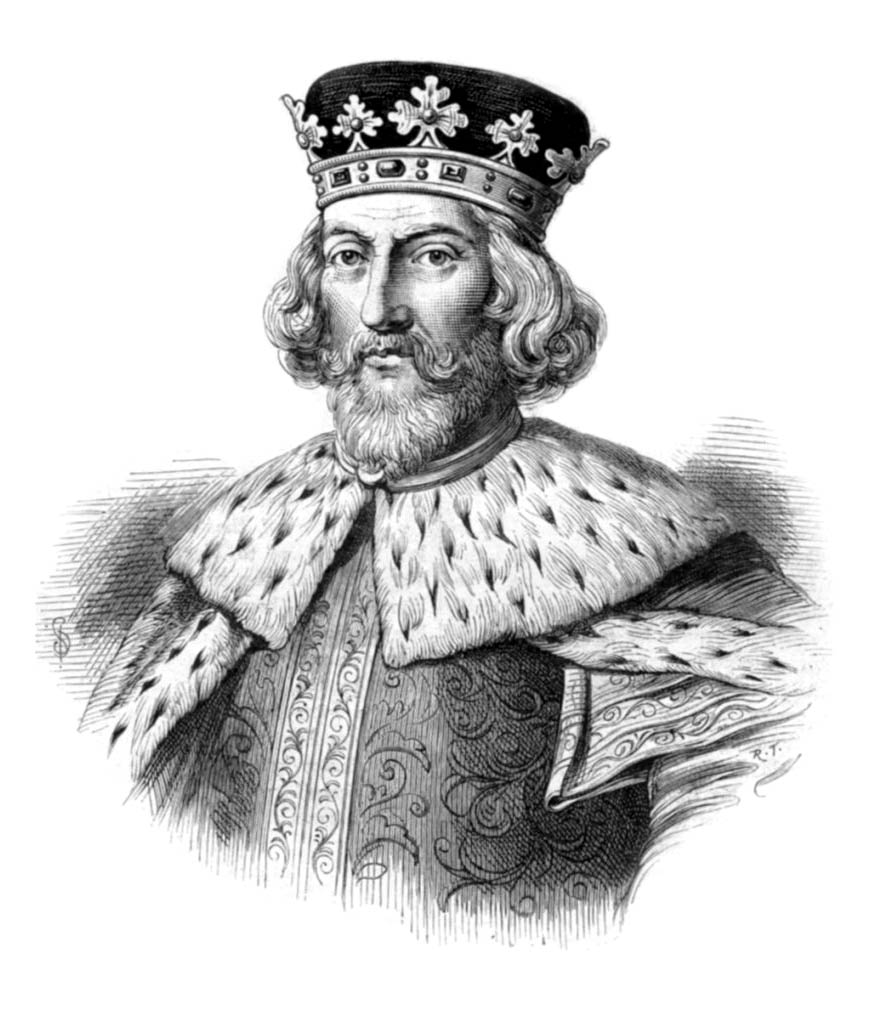
Bad King John


I've been on a bit of a tear lately about the Plantagenets--Henry II, Richard I, and my namesake, poor old John Lackland. It all started with my background research for "Command and Coercion," which is, I am glad to say, in the final stages of editing. But reading about Henry II is addictive--his personality--like that of his antagonist Thomas Becket--is compellingly presented in contemporary materials that his modern biographers have a plethora of material to work with. (Becket's correspondence, as translated by Anne Duggan makes for compelling reading). And when you're done with him, what can you do but read further, to see what happened to the rest of the cast?

Richard Coeur de Lion is the stuff of legend, and, poor old John (some of his enemies called him "Softsword" for being willing to negotiate; how do you not feel for the guy?) had to follow the most able and the most valiant king, respectively, of medieval times. Daunting, what? All of which has interested me in John. His capture of his rebellious nephew Arthur argues that he was capable of the Angevin speed and powerful attack tactics created by his father and perfected by Richard; his dry wit sometimes comes through in the chronicles, even though the monks' disdain for the king is patent. But who was John?

Well, I'm checking that out through several sources. First, W.L. Warren, author of what remains the definitive biography of Henry II, also has written a life of John. And the marvelous New Interpretations series from Boydell & Brewer, which allowed me to update my awareness of Henrican scholarship has also put out a volume of John. I'm also planning on reading Kate Norgate's classic history of the Angevins, and, as a lark, I'll give James Goldman's Myself as Witness a try.

I doubt this will lead to any new writing; it's just to scratch my itch to know the facts, insofar as they can be known.

Oh, and proof that you can't improve on Katherine Hepburn and Peter O'Toole:


Count me with Jed Bartlet.

Monday, April 30, 2012

Anglocat in Print

So, if anyone is interested in some seriously well done exploration on Catholic social teaching in the context of the rights of labor, hie thee to the current issue of The Journal of Catholic Legal Studies. Now, admittedly, I'm prejudiced, as my article “Not Charity But Justice”: Charles Gore, Workers, and the Way, which deals with parallel Anglican developments around the time of Rerum Novarum, appears as one of the articles, based on a presentation I gave at the conference recorded in this double issue. But, quite seriously, the bishops, theologians and lay presenters exemplified what to me was best in my Catholic upbringing. It was a trip back to a place no longer my home, but one which played a powerful role in forming who I am.

And, one last taste of Benjamin Britten, to end April with: