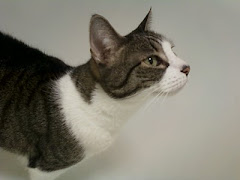
The Watcher Cat

The Watcher Cat
Showing posts with label T.H. White. Show all posts

Monday, February 4, 2019

In The Castle of the Forest Sauvage


We begin:

An older boy, leading his foster-brother, angrily tries to fly a hawk, who flaps away, itself in a mood. The hawk will not be taken willingly, and heads deeper into the dark, frightening forest near the boys' home, the Forest Sauvage. The older boy, angry at himself, his brother (who warned him), and the hawk, storms off home. The boy follows the hawk into the depths of the Forest Sauvage, and pursues, even as the shadows lengthen.

The world changes.

***

As a better writer than me once put it, " I really didn't know. I wasn't sure. You lose sight sometimes. Thank you!"

I've been revisiting T.H. White's original, uncut, unblemished, "fully rounded, bright and done," The Sword in the Stone, and it is every bit as glorious--no, it is far more glorious than when I read it as a child. Seriously, it is a beautiful book.

But you must read it alone and apart from the compilation volume The Once and Future King. Brilliant though that volume is, comprising the two sequels, and a final book, The Candle in the Wind, that only appears in the tetralogy, the edits White made to Sword lose much of the grand daylight sense of whimsy and anachronistic comedy that make the original so special. The lost set pieces--Merlyn dueling Madam Mim (White's original cries out for Michelle Gomez to play the mad, funny, beautiful-but-deadly villainess), the rescue of Morgan le Faye's captives (Morgan as a jaded 30's sophisticate (Constance Bennett, perhaps?), whose sunglasses blot out what she doesn't want to see), and the lyrical visit to the kindly snake T. Natrix--the inserted materials from the aborted The Book of Merlyn are well worth having, but not in Sword. They are a harder, older man's writing, the writing of a man whose hope in his kind is flagging, and the sunset of that uncompleted volume is bright, but not like the dawn-filled sky of White's first Arthurian romance.

No. Read the original or go home. And do not watch the Disney movie. Wait for a proper adaptation (Michelle Gomez required!), or read the original--aloud, if you can; this marks two books I have read aloud to myself for the savor of the language. The Christmas dinner and Boxing Day boar hunt are beautiful in ways that I simply missed as a child, as a youth, as a young man. Now, ensconced in middle age, I laugh at Sir Ector--but for him, too. King Pellinore, Robin Wood, and, most surprisingly, William Twyti, King Uther's gnarled and wiry huntsman, strike different chords in me now. (I defy you to read aloud the boar hunt, and remain dry-eyed at “He [Twyti] said, 'Good dog, Beaumont the valiant, sleep now, old friend Beaumont, good old dog.' Then Robin's falchion let Beaumont out of this world, to run free with Orion and roll among the stars.” )

But White's use of language is extraordinary throughout. Here he is, setting a scene, and creating a song another man would simplify two decades later:
These marvels were great and comfortable ones, but in the old England there was a greater still. The weather behaved itself.
In the spring all the little flowers came out obediently in the meads, and the dew sparkled, and the birds sang; in the summer it was beautifully hot for no less than four months, and, if it did rain just enough for agricultural purposes, they managed to arrange it so that it rained while you were in bed; in the autumn the leaves flamed and rattled before the west winds, tempering their sad adieu with glory; and in the winter, which was confined by statute to two months, the snow lay evenly, three feet thick, but never turned into slush
Such gems are freely strewed by White throughout the novel; here's White describing the young Arthur (called the "Wart" because he's illegitimate (so everyone thinks), after falling asleep in the woods:
The boy slept well in the woodland nest where he had laid himself down, in that kind of thin but refreshing sleep which people have when they begin to lie out of doors. At first he only dipped below the surface of sleep, and skimmed along like a salmon in shallow water, so close to the surface that he fancied himself in air. He thought himself awake when he was already asleep. He saw the stars
above his face, whirling on their silent and sleepless axis, and the leaves of the trees rustling against them, and he heard small changes in the grass. These little noises of footsteps and soft-fringed wing-beats and stealthy bellies drawn over the grass blades or rattling against the bracken at first frightened or interested him, so that he moved to see what they were (but never saw), then soothed him, so that he no longer cared to see what they were but trusted them to be themselves, and finally left him altogether as he swam down deeper and deeper, nuzzling into the scented turf, into the warm ground, into the unending waters under the earth
Not a bit of showing off to be seen; the similes enrich and convey the feeling White wishes to convey, concretely.

Among all the character beats (on Sir Ector's "proper" son, Kay: “He was one of those people who would be neither a follower nor a leader, but only an aspiring heart, impatient in the failing body which imprisoned it.”), apothegms, the comedy, the call-backs (or forward; Merlyn lives backwards in time), and may have been Sherlock Holmes in the 1890s), comes the single best advice I have found in a book:
“The best thing for being sad," replied Merlin, beginning to puff and blow, "is to learn something. That's the only thing that never fails. You may grow old and trembling in your anatomies, you may lie awake at night listening to the disorder of your veins, you may miss your only love, you may see the world about you devastated by evil lunatics, or know your honour trampled in the sewers of baser minds. There is only one thing for it then — to learn. Learn why the world wags and what wags it. That is the only thing which the mind can never exhaust, never alienate, never be tortured by, never fear or distrust, and never dream of regretting. Learning is the only thing for you.”
There speaks a man who has battled his own demons with curiosity, books, keen observation.

And then read the rest, The Witch in the Wood, The Ill-Made Knight, and then return to the omnibus, and read The Candle in the Wind. And don't neglect The Book of Merlyn, because this last gasp of White's Arthurian genius, as the Second World War engulfed, and threatened, everything he believed in, White manages one last affirmation of humanity:
He [Arthur, now in old age, the night before his final battle] caught a glimpse of that extraordinary faculty in man, that strange, altruistic, rare, and obstinate decency which will make writers or scientists maintain their truths at the risk of death. Eppur si muove, Galileo was to say; it moves all the same. They were to be in a position to burn him if he would go on with it, with his preposterous nonsense about the earth moving round the sun, but he was to continue with the sublime assertion because there was something which he valued more than himself. The Truth. To recognize and to acknowledge What Is. That was the thing which man could do, which his English could do, his beloved, his sleeping, his now defenceless English. They might be stupid, ferocious, unpolitical, almost hopeless. But here and there, oh so seldome, oh so rare, oh so glorious, there were those all the same who would face the rack, the executioner, and even utter extinction, in the cause of something greater than themselves. Truth, that strange thing, the jest of Pilate's. Many stupid young men had thought they were dying for it, and many would continue to die for it, perhaps for a thousand years. They did not have to be right about their truth, as Galileo was to be. It was enough that they, the few and martyred, should establish a greatness, a thing above the sum of all they ignorantly had
The Book of Merlyn closes with a dedication to Sir Thomas Malory, and asks prayers for his soul, and that of his humble disciple (White himself), who now "lays down his books, to fight for his kind."

The books are extraordinary, unlike any others in literatureI have read.

The story begins with a boy, chasing a hawk, into the Forest Sauvage, where he meets an old man (or a young man?) who will be his tutor.

Begin.

Wednesday, October 11, 2017

The Sleeping People and the Hedgehog


In T.H. White's long unpublished last Arthurian novel, The Book of Merlyn, the elderly Arthur, on the night before his final battle, accompanied only by his old friend from childhood, the Hedgehog (or Tiggy, or hedge-pig), climbs a hill. Arthur, betrayed by his people, his wife, his friends, and his son, climbs a hill, and muses:
England was at the old man's feet, like a sleeping man-child. When it was awake it would stump about, grabbing things and breaking them, pulling the cat's tail, nourishing its ego with amoral and reckless mastery. But in sleep its masculine force was abdicated. The man-child sprawled undefended now, vulnerable, a baby trusting the world to let it sleep in peace.

All the beauty of his humans came upon him, instead of their horribleness. He saw the vast army of martyrs who were his witnesses: young men who had gone out even in the first joy of marriage, to be killed on dirty battlefields like Bedegraine for other men's beliefs: but who had gone out voluntarily: but who had gone out because they thought it was right: but who had gone although they hated it. They had been ignorant young men, perhaps, and the things which they had died for had been useless. But their ignorance had been innocent. They had done something horribly difficult in their ignorant innocence, which was not for themselves.

He saw suddenly all the people who had accepted sacrifice: learned men who had starved for truth, poets who had refused to compound in order to achieve success, parents who had swallowed their own love in order to let their children live, doctors and holy men who had died to help, millions of crusaders, generally stupid, who had been butchered for their stupidity—but who had meant well

. . . .

They might be stupid, ferocious, unpolitical, almost hopeless. But here and there, oh so seldom, oh so rare, oh so glorious, there were those who would face the rack, the executioner, and even utter extinction, in the cause of something greater than themselves. Truth, that strange thing, that jest of Pilate’s.
And, as the King's thoughts darken again, the hedgehog offers him the comfort he once offered the old man when he was a boy known as Wart:
The hedgehog asked, “Dost tha mind as how us used to sing for un?”

“I minds un well,” said Arthur. “’Twas ‘Rustic Bridge’, and ‘Genevieve' and ...and..."

"‘Home Sweet Home’.”

The king quite suddenly bowed his head.

****

“Majesty,” the hedgehog mentioned shyly, “us gotter fresh un."

There was no reply.

"When us knowed tha was acoming us larned a fresh 'un. 'Twas for thy welcome, like. Us learned it off that there Mearn.”

"Sing it," gasped the old man. He had stretched his bones upon the heather, because it was all too much.

And there, upon the height of England, in a good pronunciation because he had learned it carefully from Merlyn, to Parry's music from the future, with his sword of twigs in on grey hand and a chariot of mouldy leaves, the hedgehog stood to build Jerusalem, and meant it.

Bring me my Bow of burning gold;
Bring me my Arrows of desire:
Bring me my Spear: O clouds unfold!
Bring me my Chariot of fire!

I will not cease from Mental Fight,
Nor shall my Sword sleep in my hand:
Till we have built Jerusalem,
In Englands green and pleasant Land.
White wrote these words in the early days of World War II, as he prepared to, as he put it, "lay down his books to fight for his kind," meaning all those who strove, "in their own small way, to still the ancient brutal dream of Atilla the Hun."

Tuesday, June 27, 2017

"The Ants Go Marching Two by Two": The Web Planet


This story arc--really, I can't do the usual, here, because these story arcs defy categorization. The Web Planet is weird in a way I don't associate with Doctor Who--it reminds me of early films. Yes, the obvious comparison is Méliès's 1902 film Trip to the Moon:


But it also is reminiscent of March of the Wooden Soldiers (1934), a phantasmagorical fairy tale that, like A Trip to the Moon,creates a world that is somewhat like ours, but is peopled with strange creatures and glimpsed through the prism of Victorian nightmare images.

The world of Vortis and its inhabitants are immensely detailed, lovingly evoked, and yet they are completely unrealistic. It's almost as if the Doctor and his companions have again been shrunk and are housed in a victorian puppet theater of the more gothic kind. More than any other planet the TARDIS has visited to date, Vortis and its inhabitants are fully realized, but like a cartoon.

The Zarbi, the ant-creatures of Vortis, are individually mindless soldiers, following the prompting of a single guiding force--the Animus, the main antagonist. Yet Vrestin, the main spokes--er, moth. The Menoptera are moths.

No, really:


So, Vestrin, the spokesmoth does not condemn the Zarbi completely; she says, instead, that "[t]he Zarbi are not an intelligent species, but they were essential to the life pattern here. We lived at peace with them, until they were made militant by the dark power."

The Doctor and Ian are not so kind:
IAN: What do you think they are, Doctor?
DOCTOR: Hmm?
IAN: Those things out there.
DOCTOR: Well, to use the term of Earth, I suppose we should call them insects.
IAN: Ants? I've seen a colony of ants eat their way right through a house. That size, they could eat their way through a mountain. Why are they that big?
DOCTOR: Size is only relative. In this rarified atmosphere, it appears that evolution has chosen that particular form of life on this planet.
IAN: Ants.
DOCTOR: Yes.
IAN: So relentless, indestructible. What are we going to do? Have you got any ideas?
DOCTOR: Well, it's this voice. It's this, this, this, this, this Queen of the ants, you might say.
The description of the ants is interesting here. I've no proof of this, and indeed may be wronging Bill Strutton, who wrote the script, but I can't help but think that the story of the ants added to the reworked version of The Sword in the Stone (1938) in the omnibus volume of The Once and Future King (1958), plays a role here.

You see, The Sword in the Stone is, in its 1938 text, much lighter than that published in the omnibus edition. In it, the young orphaned ward of Sir Ector, his name softened from Arthur to Art, and then replaced with the contemptuous, but not entirely unaffectionate, "Wart," finds a tutor--Merlyn--who educated both the Wart and his foster brother, Kay, but gives the Wart special tutelage, in visiting the animals to see how they are governed. In the tetralogy, though, we lose the charming battle between Merlyn and Madame Mim, and the visit to Queen Morgan le Fey. They are replaced by two episodes from The Book of Merlyn, one in which the aged King Arthur is shown brief happiness by visiting the geese, and discovers the miserable, regimented life of an ant. These episodes, rewritten for the Wart, are darker than the rest of The Sword in the Stone, don't fit as well as in The Book of Merlyn, but are arresting, especially the horror of the visit to the ants, which includes loss of personality (like Barbara and Vicki undergo) and body horror (the maimed Menoptera, the grubs stand in well). Like Dennis Spooner's viewing The Web Planet as "a parable about socialism, with the Zarbi and the Menoptera as the oppressed and the oppressors respectively," so too White intended the ants in The Once and Future King as a scathing portrayal of Soviet communism.

Published only seven years before The Web Planet, The Once and Future King remains in print today, and has left a large mark. Hartnell's Doctor is not unlike Merlyn: tetchy, absent-minded, laughing at the ironies only he can see, and kind underneath it all. (Interesting, Merlyn, who lives backwards in time, affects Victorian fashions on several occasions, as well as referencing events from the 19th Century. Hartnell's aesthetic is quite Victorian professor-ish, rather like Merlyn's.) It's quite conceivable, with its fairytale setting, its darkness as well as light, and the nightmare image of ant-land White conjures up, played a role in creating "The Web Planet."

****

The politics and sources of The Web Planet aside, its spectacle, hand-made and old-fashioned is what lingers. The plot is stretched too long, the story is unexplained (what exactly is the Animus? Phil Sandifer writes that "[l]ater writers engaged in a kind of ham-handed retcon that proclaimed the Animus, along with some other classic villains, to in fact be explicitly part of the Cthulhu mythos (Animus is apparently Lloigar, a 1932 creation of August Derleth). Although this retcon was, all told, a pretty dumb idea that does some real injustice to Bill Strutton's creation of the Animus, the observation that there's something Lovecraftian about this monster is pretty on target.") I can't improve on that, really.)

But deeply odd though this one is, it has a magic to it--the magic lantern of clever theater work, not unlike the charm of the shows staged by the parents in A.S. Byatt's The Children's Book. It's alien, strange, and sometimes alienating. The stylized movements by Roslyn de Winter are weirdly apposite even when thy seem bizarre.

Verity Lambert's Doctor Who is a show willing to gamble on an old-fashioned--even in 1965--kind of spectacle, confident it will pull it off. Lambert wins her bet.