
Sunday, May 18, 2008
"Neural Buddhism and the Trinity"
For Trinity Sunday, Andrew Sullivan engages his readers in some stimulating back-and-forth on science, mysticism, and Buddhism. The whole series of posts, not just the one linked, is recommended.

Thursday, May 8, 2008
All Shall Be Well...
Today is the feast day of Julian of Norwich, author of the Revelations of Divine Love. Dame Julian, an anchoress whose visions she compiled into a narrative combining robust common sense, profound mystical insight, and a calm, refreshing faith, lived from approximately 1342 to about 1420.
For me, Dame Julian's image of the world as a small thing, the size of a hazlenut,but still deeply cherished by its creator, began some serious reflections on getting life's problems into perspective. And her constant focus on the love and compassion of Christ, and her certitude that even sin will be redeemed--that sin is "behovable, but all shall be well, and all shall be well, and all manner of thing shall be well" is one of the great mystical reassurances. See Revelations of Divine Love,
ch. 27.
Dame Julian is especially beloved for her clarity of vision, and her charity; for her, the soul has a kernel within that does not consent to sin, and so will be saved, and her vision of Christ's "courtesy" (a strange world by modern standrds, but accurately capturing the spirit of her time--and even today, a word to prompt reflection) is moving and potent.
The ripples from her book are still spreading today; within the Episcopal Church, The Order of Julian of Norwich, a monastic order open to both women and men, carry on her tradition of contemplative life, daily work, and thoughtful prayer, meditation, and preaching. (This sermon, entitled "The Mystical Christ," by order founder Father John-Julian, OJN, compellingly sketches in a few short paragraphs, the folly of religion "shrunken and withered into law, measurement, emotion, and/or overt certainty about those things we cannot even vaguely comprehend," and the resultant appeal of New Age thought which at least recognizes the need for mysticism--and then goes on to point out that it is in mystical experience of Christ, and the salvific work of the Holy Spirit, that Christ is ubiquitous to religion--even when not called by name. Fr. John-Julian prescribes, in words reminiscent of Inge, an embrace of greater openness to mysticism, and appreciation of all our differing gifts). (By the way, Fr. John Julian has published an extremely faithful, but accessible translation of the Revelations).
Speaking of Inge, in contrast to Julian's contemporary Margery Kempe, whom he found problematic in the extreme (he adopts, in quite a different spirit than Margery uses it, her epithet for herself, "a poor creature"), Inge celebrates Dame Julian in his Mysticism in Religion (1948).
For me, Dame Julian's image of the world as a small thing, the size of a hazlenut,but still deeply cherished by its creator, began some serious reflections on getting life's problems into perspective. And her constant focus on the love and compassion of Christ, and her certitude that even sin will be redeemed--that sin is "behovable, but all shall be well, and all shall be well, and all manner of thing shall be well" is one of the great mystical reassurances. See Revelations of Divine Love,
ch. 27.
Dame Julian is especially beloved for her clarity of vision, and her charity; for her, the soul has a kernel within that does not consent to sin, and so will be saved, and her vision of Christ's "courtesy" (a strange world by modern standrds, but accurately capturing the spirit of her time--and even today, a word to prompt reflection) is moving and potent.
The ripples from her book are still spreading today; within the Episcopal Church, The Order of Julian of Norwich, a monastic order open to both women and men, carry on her tradition of contemplative life, daily work, and thoughtful prayer, meditation, and preaching. (This sermon, entitled "The Mystical Christ," by order founder Father John-Julian, OJN, compellingly sketches in a few short paragraphs, the folly of religion "shrunken and withered into law, measurement, emotion, and/or overt certainty about those things we cannot even vaguely comprehend," and the resultant appeal of New Age thought which at least recognizes the need for mysticism--and then goes on to point out that it is in mystical experience of Christ, and the salvific work of the Holy Spirit, that Christ is ubiquitous to religion--even when not called by name. Fr. John-Julian prescribes, in words reminiscent of Inge, an embrace of greater openness to mysticism, and appreciation of all our differing gifts). (By the way, Fr. John Julian has published an extremely faithful, but accessible translation of the Revelations).
Speaking of Inge, in contrast to Julian's contemporary Margery Kempe, whom he found problematic in the extreme (he adopts, in quite a different spirit than Margery uses it, her epithet for herself, "a poor creature"), Inge celebrates Dame Julian in his Mysticism in Religion (1948).
Thursday, May 1, 2008
Vigilantism and Violence
According to Bishop Jack Iker, the Steering Committee North Texas Episcopalians, who wish to remain within the Episcopal Church, and not join in Iker's effort to lead Fort Worth Diocese out of the national church are "a self-selected vigilante group whose only stated purpose is 'to remain in The Episcopal Church' no matter what -- and regardless of what TEC believes or practices. They espouse a blind institutional loyalty that borders on institutional idolatry."
OK, let me see if I have this right. For Iker to scheme and take concrete steps in November 2007 to secede from the Union--oh, sorry, TEC--is perfectly appropriate behavior. Those of his flock who disagree (and whose consciences Iker has professed he would respect) and who prepare for the Diocese's attempted "departure", are to be derogatorily termed "vigilantes"--lawless actors who implement their own ideals by force--while he is a model of Christian rectitude?
Bishop? Mote-beam?
As for the ever-more-revolting comments at SF, I too am beginning to think that it is a toxic site. The splenetic condemnation of those who wish to remain with the Church, and who value diversity of views (remember when TEC was the "Bridge Church"?) as "idolators" is simply incomprehensible. It's not enough that they believe in the rectitude of their actions, the commenters assert, no real Christian could disagree with them.
Update, May 3, 2008: And they keep bringing the offensive, as shown here.
To take a more pointed and equaly noisome example, the jocular and vindictive responses--from clergy, such as Don Armstrong, among others--to threats against Bishop Gene Robinson have ratcheted up the level of hatred to a level that I cannot identify with Anglicanism--it's redolent of Fred "God hates fags" Phelps. Here's Rev. Armstrong:
Very Christian, Father Armstrong. In my Bible, Jesus used slightly different words on the Cross--"Father, forgive them; for they know not what they do." But, perhaps you have a new translation. Or are following a different Lord.
OK, let me see if I have this right. For Iker to scheme and take concrete steps in November 2007 to secede from the Union--oh, sorry, TEC--is perfectly appropriate behavior. Those of his flock who disagree (and whose consciences Iker has professed he would respect) and who prepare for the Diocese's attempted "departure", are to be derogatorily termed "vigilantes"--lawless actors who implement their own ideals by force--while he is a model of Christian rectitude?
Bishop? Mote-beam?
As for the ever-more-revolting comments at SF, I too am beginning to think that it is a toxic site. The splenetic condemnation of those who wish to remain with the Church, and who value diversity of views (remember when TEC was the "Bridge Church"?) as "idolators" is simply incomprehensible. It's not enough that they believe in the rectitude of their actions, the commenters assert, no real Christian could disagree with them.
Update, May 3, 2008: And they keep bringing the offensive, as shown here.
To take a more pointed and equaly noisome example, the jocular and vindictive responses--from clergy, such as Don Armstrong, among others--to threats against Bishop Gene Robinson have ratcheted up the level of hatred to a level that I cannot identify with Anglicanism--it's redolent of Fred "God hates fags" Phelps. Here's Rev. Armstrong:
What goes around comes around Gene...and you set about destroying the church our families have worshipped in for generations and it is bound to be costly...I know defending it from you has been costly for me…Id. (ellipses in original).
Very Christian, Father Armstrong. In my Bible, Jesus used slightly different words on the Cross--"Father, forgive them; for they know not what they do." But, perhaps you have a new translation. Or are following a different Lord.
Tuesday, April 29, 2008
Bibliolatry: Escape From Freedom
In a recent visit to the comments at Preludium, I saw that much controversy was engendered by "reasserters" who, visiting the site, demanded a "positive case" from the Bible for blessing loving, committed relationships between same-sex couples. Unsurprisingly, they were not content with what was offered. Frankly, I think the inquiry was flawed, based on the assumption that the Bible provides univocal answers for all our moral dilmmas.
I don't think that clear, simple lines of authority are laid out by God for us--the Bible is filled with tensions, contradictions, and exhortations from Jesus and Paul to what can only be called an antinominalism that flies in the face of those who seek a codex handed down by a lawgiver Messiah. But don't take it from me; here's my old friend the Gloomy Dean again:
But this sense of not being privileged in Creation, of not being an "heir" to our world, is based on a shrinking from what I've previously described as the "sense of sonship" that Henry Scott Holland has described so vividly:
Inge points out that those who do not act as sons choose to be slaves--to be blinded as Samson was, or manacled in servitude. To truncate the faculties that God gave us, in the name of safety. But we are called to be more than that--to use our gifts, not bury them in fear of loss.
I don't think that clear, simple lines of authority are laid out by God for us--the Bible is filled with tensions, contradictions, and exhortations from Jesus and Paul to what can only be called an antinominalism that flies in the face of those who seek a codex handed down by a lawgiver Messiah. But don't take it from me; here's my old friend the Gloomy Dean again:
The silence of God has at all times been a trial to mankind. Men have sought in all sorts of way for an infallible, unmistakable, authoritative answer to all their questions, which shall save them from the responsibility of judging, and once for all lift the "burden and weight of this unintelligible world" from their shoulders. They would gladly consent to being led blindfold if only they could be quite sure of being led right. They shrink from the right and duty of private judgment; they will even put on manacles to keep their hands from trembling, and take refuge in a shelter to which no winds of doubt are allowed to penetrate.W.R. Inge, Mysticism in Religion (1948) at 14.
This sense of weakness and insecurity is the source of the demand for an infallible authority in religion. . . . [Authority in religion] is an assistance which we crave for because we are not at home in the world in which we live.
But this sense of not being privileged in Creation, of not being an "heir" to our world, is based on a shrinking from what I've previously described as the "sense of sonship" that Henry Scott Holland has described so vividly:
All our knowledge, for instance, relies upon our sonship; it starts with an act of faith. We throw ourselves, with the confidence of children, upon an external world, which offers itself to our vision, to our touch, to our review, to our calculation, to our handling, to our use. Who can assure us of its reality, of its truth? We must measure it by those faculties under the manipulation of which it falls: but how can the faculties guarantee to us their own accuracy? How can we justify an extension of our own inner necessities to the world of outward things? How can we attribute to nature that rational and causative existence which we find ourselves forced to assume in it? Our justification, our confidence, all issue, in the last resort, from our sonship. . . . In unhesitating reliance upon our true sonship, we sally out and deal, with the world ; we act upon the sureH.S. Holland, "Faith," in Lux Mundi at 22-23.
conviction that we are not altogether outside the secret of objective existence. We refuse absolutely to doubt, or go behind the reports made to us by feeling, by memory, by thought.
Inge points out that those who do not act as sons choose to be slaves--to be blinded as Samson was, or manacled in servitude. To truncate the faculties that God gave us, in the name of safety. But we are called to be more than that--to use our gifts, not bury them in fear of loss.
Friday, April 25, 2008
Enjoyment and Contemplation
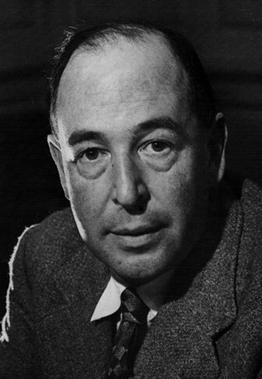 C.S. Lewis is often underrated as a thinker. That's partially because of his earliest Christian apologetics, which are marred in places by a certain complaceny and superficial quality (in part engendered by their origin as radio talks during the darkest days of World War II), were and remain so wildly popular. But, with peace and with life experience, his writings deepened steadily in both complexity and compassion.
If you compare
The Problem of Pain (1940) with A Grief Observed (1961), the difference is dramatic. The earlier work is modeled on J.R. Illingworth's contribution to Lux Mundi (1889), also entitled "The Problem of Pain." (Both are also rather progressive in that they address the theological questions posed by the pain of animals). Interestingly, Lewis' book suffers from the same defects as Illingworth's chapter--a certain detachment from the emotionally fraught nature of the subject, a complacency in the face of others' pain, and a rather blase advocacy of stoicism that seems detached from experience.
A Grief Observed, by contrast, presents Lewis' own suffering as it unfolds; its immediacy makes Lewis' gradual drawing of consolation from his faith far more credible, more human, than his earlier, antiseptic treatment of the same topic.
One of Lewis's later works, Surprised by Joy (1955), is deceptively simple. In the course of a readable memoir, taking the young Lewis from childhood through his acceptance of Christianity, Lewis raises, without jargon, critical issues on the spiritual path. Two kernels from the book struck me in rereading it this week.
First, Lewis depicts his own growing anxiety as his prayers became less about praying, and more about watching himself pray, to double check that he was sincere enough, and felt appropriately elevated. Later, the same phenomenon spoiled his reading of Norse and germanic mythology--as he sought the sensation he lost what he calls "Joy"--the aching desire for the transcendent that he experienced through "Northerness" until he fell into the trap of watching himself. In seeking to recreate the thrill, Lewis writes, he forgot that the thrill was not the wave, but teh traces left behind by the wave, and of no value in itself.
Second, Lewis distingishes between enjoyment and contemplation--with enjoyment denoting the exercise of a faculty, such as thought, or love, and contemplation denoting the analysis of the faculty. Again, his point here is that the focusing on oneself, and not the beloved, divides one from the experience of the beloved.
Simple, no? But how many of us in a dry period in our prayer life fall into the trap, and can benefit from Dr. Lewis's prescription--enage the beloved, and let the sensation take care of itself?
Saturday, April 19, 2008
Papal Words
In my introductory post I described my Roman Catholic upbringing, and pointed out that it was during the tenure of John Paul II, as "catholicism" began to mean only the conservative tradition, and an outsize veneration for the magisterium, that I drifted away from organized religion for a time. So I'm not neutral as to Pope Benedict, whose tenure as Prefect of the Congregation of the Doctrine of the Faith (that's the successor to the Inquisition, to you and me), was a stumbling block on my own faith journey, sugesting that Christianity required either low church evangelical thinking, which did not resonate with me, or what Robertson Davies once memorably termed "spiritual peonage", until I discovered the Episcopal Church.
Nonetheless, I think certain tropes in the media coverage of the Pope's current visit are highly misleading, and are letting Pope Benedict minimize the betrayal of trust presided over by himself and his late predecessor, Pope John Paul II.
First, let's acknowledge that the Pope has repeatedly and publicly addressed the sex abuse scandal, and has stated that it is "a deep shame" that he personally feels. And, at long last, he has met with some victims (albeit carefully selected, "respectful" and "socially adept" victims who remain loyal to the hierarchy, thus shielding the Pope from any untoward displays of anger).
That said, the media has repeatedly stated that this crisis "erupted in 2002." (See, for example, the previous link). That is not really so. In point of fact, media coverage of the scandal began in the mid 1980s, as evidenced by this 1986 news report, and by the fledgling efforts to address the topic that soon gave way to a 1993 papal letter that deplored the moral wrong but emphasized equally the harm done by disseminating "scandal".
The Church's defenders, such as Philip Jenkins in the conservative magazine First Things, were writing as early as 1996 that the "crisis" (which Jenkins placed in scare quotes) began in 1985 and "reached its height in 1992-93", was being used by liberals within the Church to undermine its traditionalist structure and lead to marriage for priests, women priests and heaven knows what other enormities. (In fact, as this timeline shows, the crisis can be traced to the late 1940s, and accelerated with each decade of Church cover-up).
The second media trope that is misleading is to allow Benedict to speak of being "deeply ashamed" of the crisis and yet not to note his own personal role in it. In January 2001, then-Cardinal Ratzinger issued a letter affirming that the 1962 papal edict Crimine solicitationis still pertained, and that, as Ratzinger's letter states, "Cases of this kind are subject to the pontifical secret," mandating silence for investigators, witnesses, and, it seems, victims, on pain of excommunication. (Another link may be found here; according to the Guardian, a "spokeswoman in the Vatican press office declined to comment when told about the contents of the letter," on the ground that it was "not a public document").
Benedict's generalized expressions of sympathy for the victims, and shame on behalf of the Church do not address the personal role that he, John Paul II, and, to my horror, John XXIII (who issued Crimine solicitationis) played in allowing this monstrous, 60 year long breach of trust in the name of protecting the institution unspool. That's why, as an apology, it is absolutely unavailing.
Moreover, the auguries for the future are unpromising. While Cardinal William Levada has indicated that the Church may reform some of the canon laws obstructing victims charging clergy with sexual misconduct, the only specific reform mentioned is a relaxing of the statute of limitations. Moreover, in the same article, Cardinal Levada is quoted as displaying a blithe unconcern for the behavior of the bishops over the past decades in reshuffling clergy from post to post:
Nonetheless, I think certain tropes in the media coverage of the Pope's current visit are highly misleading, and are letting Pope Benedict minimize the betrayal of trust presided over by himself and his late predecessor, Pope John Paul II.
First, let's acknowledge that the Pope has repeatedly and publicly addressed the sex abuse scandal, and has stated that it is "a deep shame" that he personally feels. And, at long last, he has met with some victims (albeit carefully selected, "respectful" and "socially adept" victims who remain loyal to the hierarchy, thus shielding the Pope from any untoward displays of anger).
That said, the media has repeatedly stated that this crisis "erupted in 2002." (See, for example, the previous link). That is not really so. In point of fact, media coverage of the scandal began in the mid 1980s, as evidenced by this 1986 news report, and by the fledgling efforts to address the topic that soon gave way to a 1993 papal letter that deplored the moral wrong but emphasized equally the harm done by disseminating "scandal".
The Church's defenders, such as Philip Jenkins in the conservative magazine First Things, were writing as early as 1996 that the "crisis" (which Jenkins placed in scare quotes) began in 1985 and "reached its height in 1992-93", was being used by liberals within the Church to undermine its traditionalist structure and lead to marriage for priests, women priests and heaven knows what other enormities. (In fact, as this timeline shows, the crisis can be traced to the late 1940s, and accelerated with each decade of Church cover-up).
The second media trope that is misleading is to allow Benedict to speak of being "deeply ashamed" of the crisis and yet not to note his own personal role in it. In January 2001, then-Cardinal Ratzinger issued a letter affirming that the 1962 papal edict Crimine solicitationis still pertained, and that, as Ratzinger's letter states, "Cases of this kind are subject to the pontifical secret," mandating silence for investigators, witnesses, and, it seems, victims, on pain of excommunication. (Another link may be found here; according to the Guardian, a "spokeswoman in the Vatican press office declined to comment when told about the contents of the letter," on the ground that it was "not a public document").
Benedict's generalized expressions of sympathy for the victims, and shame on behalf of the Church do not address the personal role that he, John Paul II, and, to my horror, John XXIII (who issued Crimine solicitationis) played in allowing this monstrous, 60 year long breach of trust in the name of protecting the institution unspool. That's why, as an apology, it is absolutely unavailing.
Moreover, the auguries for the future are unpromising. While Cardinal William Levada has indicated that the Church may reform some of the canon laws obstructing victims charging clergy with sexual misconduct, the only specific reform mentioned is a relaxing of the statute of limitations. Moreover, in the same article, Cardinal Levada is quoted as displaying a blithe unconcern for the behavior of the bishops over the past decades in reshuffling clergy from post to post:
[Cardinal Levada] said he did not foresee punishing bishops who failed to remove priests suspected of molesting young people.Cardinal Levada, who in 2006 was appointed to replace Benedict as Prefect of the Congregation, was criticized by SNAP as "slow to act, harsh to victims and committed to secrecy" in molestation cases.
“I personally do not accept that there is a broad base of bishops who are guilty of aiding and abetting pedophiles, and if I thought there were, or knew of them, I would certainly talk to the pope about what could be done about it,” the cardinal said.
“I am aware of bishops who have admitted to making mistakes, but those seem to be mistakes grounded in taking counsel that didn’t turn out to be good advice,” he said, explaining that he was referring to reports from psychologists and therapists.
Monday, April 14, 2008
Mysticism and the Way
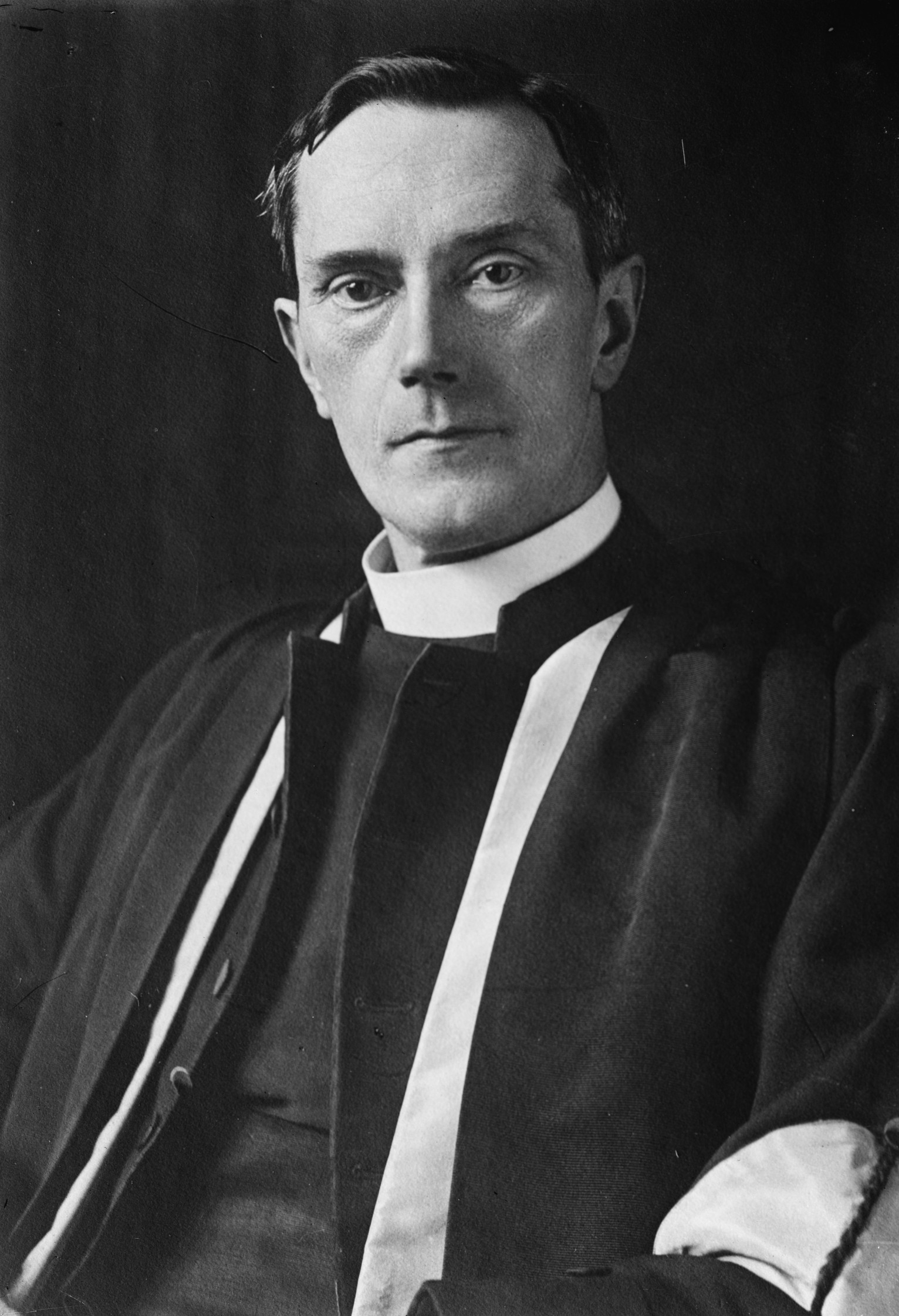 I have written often of W.R. Inge, the author of Christian Mysticism (1899) (linked on the sidebar), and of many other works, including Outspoken Essays (1920). Inge's great works on mysticism sets out certain stages that characterize the mystic path. A capsule version of this, from Outspoken Essays, sets the stage:
 Mysticism means an immediate communion, real or supposed, between the human soul and the Soul of the World or the Divine Spirit. The hypothesis on which it rests is that there is a real affinity between the individual soul and the great immanent Spirit, who in Christian theology is identified with the Logos-Christ. He was the instrument in creation, and through the Incarnation and the gift of the Holy Spirit, in which the Incarnation is continued, has entered into the most intimate relation with the inner life of the believer. This revived belief in the inspiration of the individual has immensely strengthened the position of Christian apologists, who find their old fortifications no longer tenable against the assaults of natural science and historical criticism. It has given to faith a new independence, and has vindicated for the spiritual life the right to stand on its own feet and rest on its own evidence. Spiritual things, we now realise, are spiritually discerned. The enlightened soul can see the invisible, and live its true life in the suprasensible sphere. The primary evidence for the truth of religion is religious experience, which in persons of religious genius—those whom the Church calls saints and prophets—includes a clear perception of an eternal world of truth, beauty, and goodness, surrounding us and penetrating us at every point. It is the unanimous testimony of these favoured spirits that the obstacles in the way of realising this transcendental world are purely subjective and to a large extent removable by the appropriate training and discipline. Nor is there any serious discrepancy among them either as to the nature of the vision which is the highest reward of human effort, or as to the course of preparation which makes us able to receive it. The Christian mystic must begin with the punctual and conscientious discharge of his duties to society; he must next purify his desires from all worldly and carnal lusts, for only the pure in heart can see God; and he may thus fit himself for 'illumination'—the stage in which the glory and beauty of the spiritual life, now clearly discerned, are themselves the motive of action and the incentive to contemplation; while the possibility of a yet more immediate and ineffable vision of the Godhead is not denied, even in this life.(From "Institutionalism and Mysticism," in Outspoken Essays).
These stages are called the Purgative Way, the Unitive Way, and the Illuminative Way, in Inge's more nuanced articulation in Christian Mysticism. The same three-fold path persists today; Christopher Bryant's superb 1980 work, The Heart in Pilgrimage uses the same tripartite division of the mystic path, as does Evelyn Underhill's exhaustive Mysticism (1910) (which graciously salutes Inge, who returns the compliment in later editions of Christian Mysticism). While Underhill examines the psychological dimension of the mystic quest, and Bryant deploys Jungian thinking (as well as sound spiritual guidance), Inge views it in terms of philosophy, finding, in later works, his "spriritual master" in the pagan philosopher Plotinus.
From Inge, as from Bryant and Underhill, can be found the source of the experience described as the sense of "sonship" by Henry Scott Holland: We know we are loved, because we experience love. The mystic path is not perforce one of self-denial for the sake of suffering, but rather the journey to the center to meet that love. That direct experience, as Inge postulates above, transcends the often sterile debate between doctrine and science, or between, I would add, sects. It is the experience that theologians strive to interpret, that creeds provide a structure for. It is the experience of being loved, and loving, of which St. Paul writes when he speaks of in Corinthians as the sine qua non of life in Christ.
For more Inge, see also his Light, Life and Love (1904).
Subscribe to:
Posts (Atom)



 Posts
Posts

