The Watcher Cat

The Watcher Cat

Friday, July 18, 2008

Attempted Takeover?

From GAFCON's response to the Archbishop of Canterbury's statement concerning its "Jerusalem Statement and Declaration":
On the uniqueness of Christ. We are equally concerned to hear that 'the conviction of the uniqueness of Jesus Christ as Lord and God' is 'not in dispute' in the Anglican Communion. Leading bishops in The Episcopal Church, the Anglican Church of Canada, and even the Church of England have denied the need to evangelise among people of other faiths, promoted and attended syncretistic events and, in some cases, refused to call Jesus Lord and Saviour.

On authority. [I]n the Anglican tradition, authority is not concentrated in a single centre, but rather across a number of persons and bodies. This Council is a first step towards bringing greater order to the Communion, both for the sake of bringing long overdue discipline and as a reforming initiative for our institutions.

In situations of false teaching, moreover, it has sometimes been necessary for other bishops to intervene to uphold apostolic faith and order.
On discipline. Finally, with regard to the Archbishop's concern about people who have been disciplined in one jurisdiction and have been accepted in another, we are clear that any such cases have been investigated thoroughly and openly with the fullest possible transparency. Bishops and parishes have been given oversight only after the overseeing bishops have been fully satisfied of no moral impediments to their action.

We assure the Archbishop of Canterbury of our respect as the occupier of an historic see which has been used by God to the benefit of his church and continue to pray for him to be given wisdom and discernment.
My, my. I note three interesting aspects to this:

1. The statement makes clear--not that anyone thought otherwise--that the purpose of GAFCON is power--power to claim the Anglican brand, reducing Canterbury to "an historic see," and stripping the Archbishop of Canterbury of any particular role, while claiming for itself the right to reshape the Communion, to bring forth Order and Discipline.

2. Note the casual conflation of stark accusations of allegeations of heresy behavior with much more modest substantiation; Akinola et al take exception with the Archbishop's statement that the uniqueness of Christ is not in doubt, but offer a very different specification in response; they claim that conveniently unnamed "leading bishops" have (1) denied the need to evangelize among people of other faiths--a disagreement with GAFCON as to tactics, not theology; (2) promoted and attended syncretistic events--which I doubt the GAFCON-ers mean literally, but rather in its more modern sense of "the mixture of dissimilar or incompatible things or ideas." (Id.), which could be nothing more than a tactic not unlike that of Paul in Acts 17; and finally, alleges that "in some cases" have refused to call Jesus Lord and Savior. As to this last, questions need to be asked: How many "leading bishops" do they refer to, and in what context? Do they really mean refusal, or simply the preference of different appellations they apply to Christ? But frankly, the placement of first two prongs of this purported rebuttal suggest that this last prong is one they themselves find weak.

3. Finally, they claim--consistent with point 1--that their members and they alone can judge the juridicial processes of other provinces--free and equal churches within the Communion--and that they are free to disregard discipline imposed by such other churches at their own discretion, with no comity or deferences to such other churches, as must in fact submit to their discipline.

In short, Anglicanism is to give up the via media in favor of a confessional, conciliar model--one in which a self-selected orthodox have the right to judge the rest of us, deciding who are sheep and who goats. And the Archbishop of Canterbury? He's a quaint relic, to be honored for historical significance and little more.

Sunday, July 13, 2008

Where I've Been

So, I've been leading a book study of William Inge's Christian Mysticism, and it's been a real learning experience.

First, the members of the group have been very keen to grapple with the sometimes dense philosophical content and have stayed with it even after two weeks of Neoplatonism(!) They've also raised some concerns about Inge's dislike of the via negativa, the "negative road" of mysticism that he feared could lead to quietism, to solipsism, and to divorcing the spiritual quest from prayerful engagement with the world. Also, Inge sought to keep reason at the forefront of his vision of mysticism, quoting Benjamin Whichcote's aphorism that "I oppose not rational to spiritual, for spiritual is most rational."
But, as the members of the group have pointed out to me, Inge's emphasis in thought can seem to be an idolatry of thought--a "cogitolatry," as a member coined. And, while I think it is the Divine Reason, and not human reason alone, I have to admit that Inge did show uneasiness with enthusiasm. It could be the fact that he was, after all, a Victorian Englishman, writing in 1899; it could also be that the Bampton Lectures (which the text of the book consists of) were very prestigious and led to Inge wanting to show his command of the material--but I think, in fact, that Inge was reacting to the Nineteenth Century revival of occultism. The embrace by many of the revivalists of neo-platonism, and the excesses of some of them, would concern Inge, who, in his desire to bring Christian mysticism away from the hermetic tradition of the Order of the Golden Dawn (to which A.E. Waite, Evelyn Underhill, and--gulp!--Aleister Crowley--all belonged, though not all at the same time. He overtly tried to rescue mysticism from the psychological curiosity approach, and, frankly, the horse laugh, of R.A. Vaughn's Hours With the Mystics (1893).

It's been fascinating to engage with a well-informed, passionate group about a book I've long loved, but whose limitations and flaws, stemming in part from the time in which it was written, I can see afresh in going through it with a passionate, intelligent group to whom it is new.

Friday, July 4, 2008

Farewell--For Now--to a Friend

I'm sorry to note that Father Jake is, after five years, calling it quits, and closing his place. The World will go on, without Jake to stop it from time to time, but we in the Anglican blogosphere who have been enriched by his forthright advocacy, and his passionate commitment to the Church, will be the poorer without our daily dose(s).

I understand his reasons for calling it a day, and look forward to his next appearance on the Web--focusing more on the spiritual and less on Church politics. And, as he says, it may indeed be time.

Jake sounded a clarion warning about the schismatics' desire to harvest properties and parishes from the Episcopal Church; we are all alive to that warning, now, and have seen the machinations described by Jake in, among other posts, here come to pass. The wolf has descended on the fold--and some were ready. The Episcopal Diocese of San Joaquin, in particular, has cause to appreciate Jake's ministry. The wider Church does owes him thanks, not just for the wake up call, but also for his providing a place to vent, to express fears and hopes, and to find each other. And, the community of Jacobites will go on--plans are already being formed...

As to the larger Church, and GAFCON, perhaps today, July 4, is a good day to acknowledge that nothing in the Communion will ever be the same--that the differences are out there, now, in the open. And that, if schism is here, the American Church can declare its independence, rather than devolve into the Calvinist, confessional model our "Worthy Adversaries" seek to force us. Whether peaceful coexistence or the parting of the ways is at hand, the time of secrecy is over.

Father Jake's work is, as he believes, done. Father Terry Martin will be back, and in new, exciting ventures, I have no doubt. Vogue a la galere, my friend--we await the next stage with faith.

Tuesday, June 24, 2008

The Inner Ring

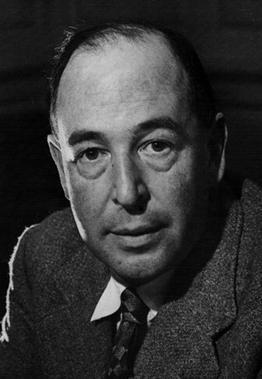
Many on the Anglican right have appropriated C.S. Lewis as an avatar of orthodoxy. I wonder if they're aware of his comment on John A.T. Robinson's
Honest to God (1963). Here's a snippet:
The Bishop of Woolwich will disturb most of us Christian laymen less than he anticipates. We have long ago abandoned belief in a God who sits on a throne in a localized heaven. We call this belief anthropomorphism, and it was officially condemned before our time. . . .We have always thought of God as being not only "in" and "above" but also "below" us....His view of Jesus as a window seems wholly orthodox (he that hath seen me hath seen the Father....Thus, though sometimes puzzled, I am not shocked by his article. His heart, though perhaps in some danger of bigotry, is in the right place.
The Honest To God Debate (1963) at 91-92.

Lewis also published in his marvellous collection They Wanted a Paper an essay titled "The Inner Ring", in which he warns of the dangers of belonging for the sake of belonging--and the concomittant pleasure of excluding:
In the whole of your life as you now remember it, has the desire to be on the right side of that invisible line ever prompted you to any act or word on which, in the cold small hours of a wakeful night, you can look back with satisfaction? If so, your case is more fortunate than most.

My main purpose in this address is simply to convince you that this desire is one of the great permanent mainsprings of human action. It is one of the factors which go to make up the world as we know it—this whole pell-mell of struggle, competition, confusion, graft, disappointment and advertisement, and if it is one of the permanent mainsprings then you may be quite sure of this. Unless you take measures to prevent it, this desire is going to be one of the chief motives of your life, from the first day on which you enter your profession until the day when you are too old to care. That will be the natural thing—the life that will come to you of its own accord. Any other kind of life, if you lead it, will be the result of conscious and continuous effort. If you do nothing about it, if you drift with the stream, you will in fact be an “inner ringer.” I don’t say you’ll be a successful one; that’s as may be. But whether by pining and moping outside Rings that you can never enter, or by passing triumphantly further and further in—one way or the other you will be that kind of man.
I wonder how many of our Anglican furious excluders are Inner Ringers, or aspirants to that status, who fear the loss of prestige, position, or acceptance? And I wonder how many of those who bridle at what can seem on the surface to be heresy have tried to meet it with the breezy self-assurance, and sympathetic tolerance, of Jack Lewis?

Monday, June 9, 2008

St. Columba and Friend


Today is the feast day of St. Columba, apostle to Scotland. When I was in college, I took a course in medieval literature, in which we read (among many others) The Age of Bede, in which I learned that St. Columba, among many other challenges in Scotland, ran across Nessie:
[St. Columba, encountering Nessie about to devour a swimming Pict(!)] raised his holy hand, while all the rest, brethren as well as strangers, were stupefied with terror, and, invoking the name of God, formed the saving sign of the cross in the air, and commanded the ferocious monster, saying, "Thou shalt go no further, nor touch the man; go back with all speed." Then at the voice of the saint, the monster was terrified, and fled more quickly than if it had been pulled back with ropes, though it had just got so near to Lugne, as he swam, that there was not more than the length of a spear-staff between the man and the beast. Then the brethren seeing that the monster had gone back, and that their comrade Lugne returned to them in the boat safe and sound, were struck with admiration, and gave glory to God in the blessed man. And even the barbarous heathens, who were present, were forced by the greatness of this miracle, which they had seen, to magnify the God of the Christians.
(Adamnan, Life of St. Columba, ch. 28).

How do you not love a saint who encounters a Great Myth (apparently in an unusually ferocious mood; Nessie is usually described as shy), rescues its victim, and then doesn't feel the need to kill the dragon? I'm reminded of Robertson Davies' book World of Wonders, where it's suggested that the best saints do not kill the dragons they encounter, but rather domesticate them--meaning, of course, that they don't kill off their shadow sides, but confront them, master them, and come to terms with them, even accept them.

As, in a way, did St. Columba.

Sunday, June 8, 2008

Whereof One Cannot Speak...

There's a lot happening in the Anglican world just now, but it's mostly feinting and preparing for the much anticipated "Battle of Lambeth."

I find that I have nothing to say about it, just now. The public posturing of the various participants (and the non-participants) may or may not reflect the behind-the-scenes activities in the run-up to Lambeth.

I feel that it's time for me at least to tend my garden, to trust in the Spirit, and to say, with Julian of Nowich, "All shall be well, and all shall be well, and all manner of things shall be well..."

Meanwhile, in my garden (the metaphorical one) what's going on? My discernment process is in a brief (I hope!) hiatus, and a long-standing personal crisis nears its culmination. On the former, the pragmatic factors seem to strongly urge the diaconate (and I can quite easily see myself in a justice ministry), but the academic pull of seminary is strong--so I have a lot of reflection to do.

On a more positive note, I'm teaching at church a seven week class this summer on Inge's 1899 Christian Mysticism, and reading up in preparation.

And so it goes....for now, at any rate.

Sunday, June 1, 2008

Prince Bishops?

Courtesy of Thinking Anglicans, I see that Bonnie Anderson is defending the function of the episcopacy in the American church, responding to Archbishop Rowan Williams' Advent Letter from December, 2007. Anderson's concern is raised by the Archbishop's statement that:
A somewhat complicating factor in the New Orleans statement has been the provision that any kind of moratorium is in place until General Convention provides otherwise. Since the matters at issue are those in which the bishops have a decisive voice as a House of Bishops in General Convention, puzzlement has been expressed as to why the House should apparently bind itself to future direction from the Convention. If that is indeed what this means, it is in itself a decision of some significance. It raises a major ecclesiological issue, not about some sort of autocratic Episcopal privilege but about the understanding in The Episcopal Church of the distinctive charism of bishops as an order and their responsibility for sustaining doctrinal standards. Once again, there seems to be a gap between what some in the Episcopal Church understand about the ministry of bishops and what is held elsewhere in the Communion, and this needs to be addressed
Anderson draws from this statement, and the fact that the responses to the second draft of the proposed Anglican Covenant is to be provided by the bishops, a concern that the American polity will be brushed aside, and bishops invited to aggrandize themselves. I can't say that she's wrong.

It's an interesting question, whether the Archbishop's rather high view of the episcopate should be or even can be a required one within all constituent members the Communion. I think, in view of the variety of views expressed within the Church of England (see, e.g., The Historic Episcopate, ed. Kenneth M. Carey (1954); K.E. Kirk, ed. The Apostolic Ministry (1947)), Abp. Williams's apparent suggestion that the role of the bishops inherently carries with it and even requires a certain ability to act unilaterally may be difficult to maintain as an item of faith. (In his contribution to the former, J.A.T. Robinson makes the interesting point that the result of a too-high episcopate is to isolate the bishop from the Church, to the detriment of both).

Well, we'll see how doctrinaire the Archbishop is, or whether indeed he intends to pursue this issue. And further study of this issue is warranted. In the meantime, I suspect that Fr. Tobias Haller's comment on TA that "[i]t isn't just that we are divided by a common language, but a common episcopate, it seems" may be the best one can say.